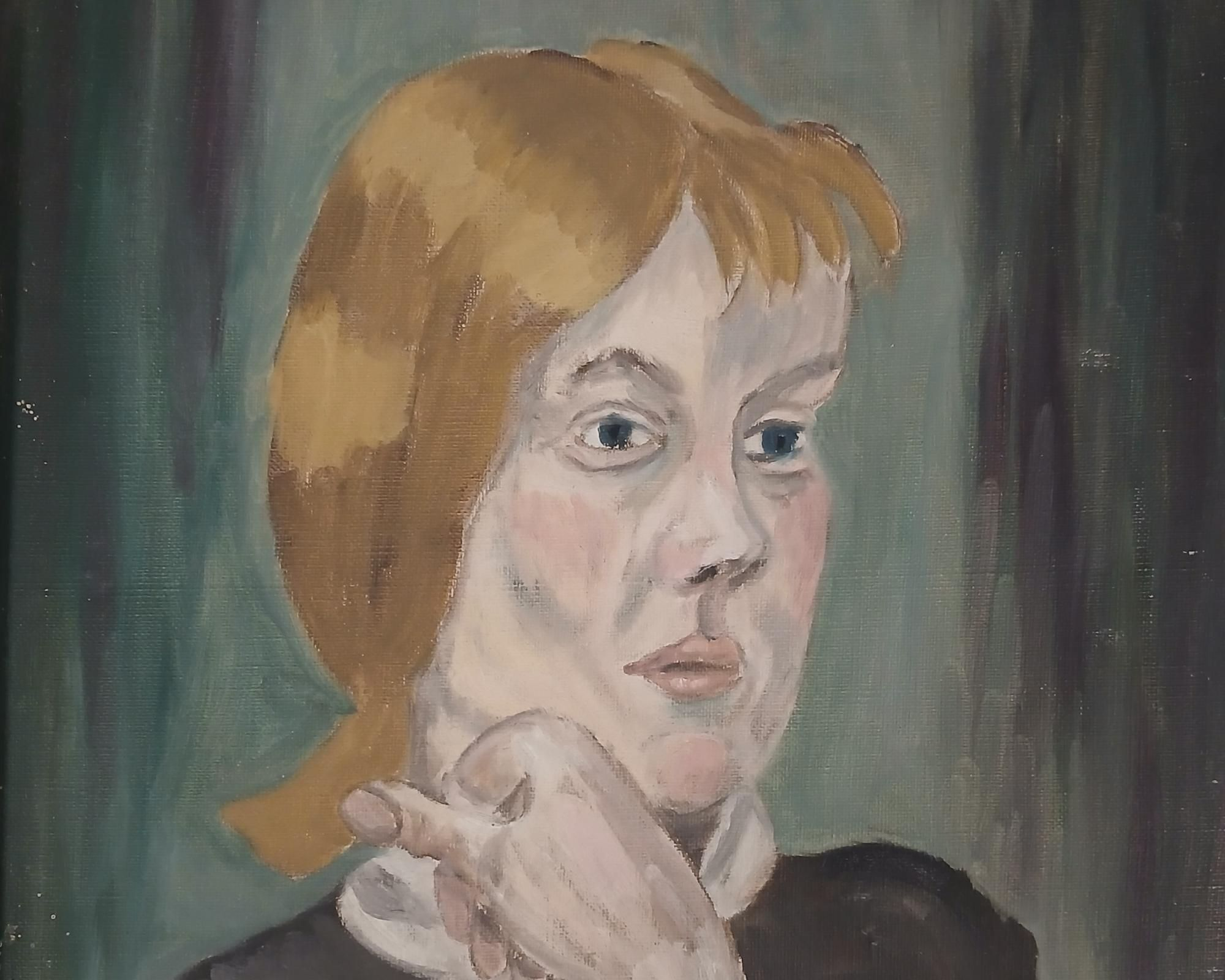
More than 80 previously unknown artworks by novelist and philosopher Iris Murdoch have been discovered in a concealed attic room in her former Oxford home.
The collection includes paintings, sketches, surrealist landscapes and what is believed to be Murdoch’s only known self-portrait. Twenty-five works are now being shown as part of Iris Murdoch Amongst the Artists at the University of Chichester, in an exhibition running from 14 August to 10 December 2026.
It is a fascinating art-world discovery. But it also raises a very practical question for every working artist:
What happens to your art if nobody knows where it is, what it means or how it fits into your wider body of work?
Artists naturally concentrate on making work. But over a career, that work can become scattered across studios, exhibitions, galleries, collectors, storage spaces, folders, hard drives and social media accounts. Without a simple system for documenting it, an artist can gradually lose sight of their own creative history.
The Murdoch discovery is an extraordinary example. Her newly uncovered works date largely from her student years around 1939–41 and reveal an aspect of her creative life that was previously little understood.
For today's artists, there is a simple lesson: documenting your work is part of being an artist.
You don't need to wait until you have hundreds of pieces before organising your work. Start with the artwork you're creating now. For each piece, record:
Over time, this becomes something much more valuable than an inventory. It becomes a searchable record of your creative career.
A photograph and title tell only part of the story.
Why did you make the work?
What inspired it?
Does it belong to a particular series?
Was it connected to an exhibition, place or period in your life?
That context can become enormously valuable later - both to collectors discovering your work and to anyone trying to understand your artistic development. It also means you aren't trying to reconstruct the story five or ten years later.
Instagram and other social networks are excellent ways of reaching people, but they weren't designed to become the permanent record of an artist's career. Posts disappear down feeds. Algorithms determine visibility. Accounts and platforms change.
Your primary record should be somewhere you control.
That is one of the ideas behind LettsArt.
LettsArt is no-code Art Intelligence software built for artists and gallerists to manage, distribute and sell art directly to collectors. Rather than being a marketplace, it gives artists and gallerists the tools to create and manage their own online gallery and organise their work in one place.
There's another advantage to organising your work properly. Your archive doesn't have to remain an archive.
Collections can become exhibitions. Older work can be rediscovered. Visitors can understand how your practice has developed. Collectors can explore beyond the handful of works they might encounter on social media.
A well-organised online gallery gives your work structure and context - Iinstead of showing isolated images, you can begin telling the story of your practice. That's important because artists aren't simply producing individual objects. They're creating a body of work.
Don't attempt to catalogue an entire career in one weekend. Begin with your most recent ten artworks and make sure every one has a good image, title, description, dimensions and relevant information. Then work backwards.
Group related artwork by series, theme, period or exhibition. Collections help visitors understand relationships between works and make larger bodies of art easier to explore.
Write a short description when you add a new piece. Even three or four sentences about the inspiration, process or context can become invaluable later. LettsArt's Art Intelligence tools can also help artists create artwork descriptions and tags, reducing some of the administrative work involved in maintaining a gallery.
Few artists expect their work to end up hidden behind a bookcase for decades Bbut creative work disappears in less dramatic ways every day.
It gets left on old laptops. Stored in boxes. Forgotten after exhibitions. Lost among thousands of photographs. Or buried years deep in a social media feed. The discovery of Iris Murdoch's artwork is remarkable because those works survived.
Today's artists have the opportunity to do something previous generations couldn't: create an accessible, organised digital record of their creative lives as they happen. Your archive isn't something to think about at the end of your career.
It's something you build every time you make a piece of art.
***************************************************
Not using LettsArt? Why not sign up today? It’s powerful software for artists to show, manage and distribute their art online. Perfect for artists with zero tech skills, our no-code, AI software lets you take control of your online presence and build sustainable success through direct sales.
To sign up to LettsArt (it’s FREE!) go to www.LettsArt.com .
***************************************************
LettsArt is no-code Art Intelligence software for artists and gallerists to manage, distribute and sell art directly to collectors.
No. LettsArt is software rather than a marketplace. It gives artists and gallerists tools to build and manage their own online gallery.
A digital archive helps you maintain an organised record of your artwork, its images, information and creative context. It can also make your wider body of work easier to manage and explore.
Start small. Catalogue your ten most recent or most important pieces first, then gradually work backwards through your archive.
Yes. LettsArt includes Art Intelligence tools that can help generate artwork descriptions and tags, making some of the administrative work involved in organising a gallery faster.

