Three cities, three young painters, three very different ways of asking the same question: what does it mean to make an image that holds up - emotionally, materially, socially - right now? From Santa Monica to Los Angeles to London, Danny Minnick, Paul Robas and Sam Lipp each build a world around the body and its proxies, but they do it with radically different temperatures, surfaces and stakes.
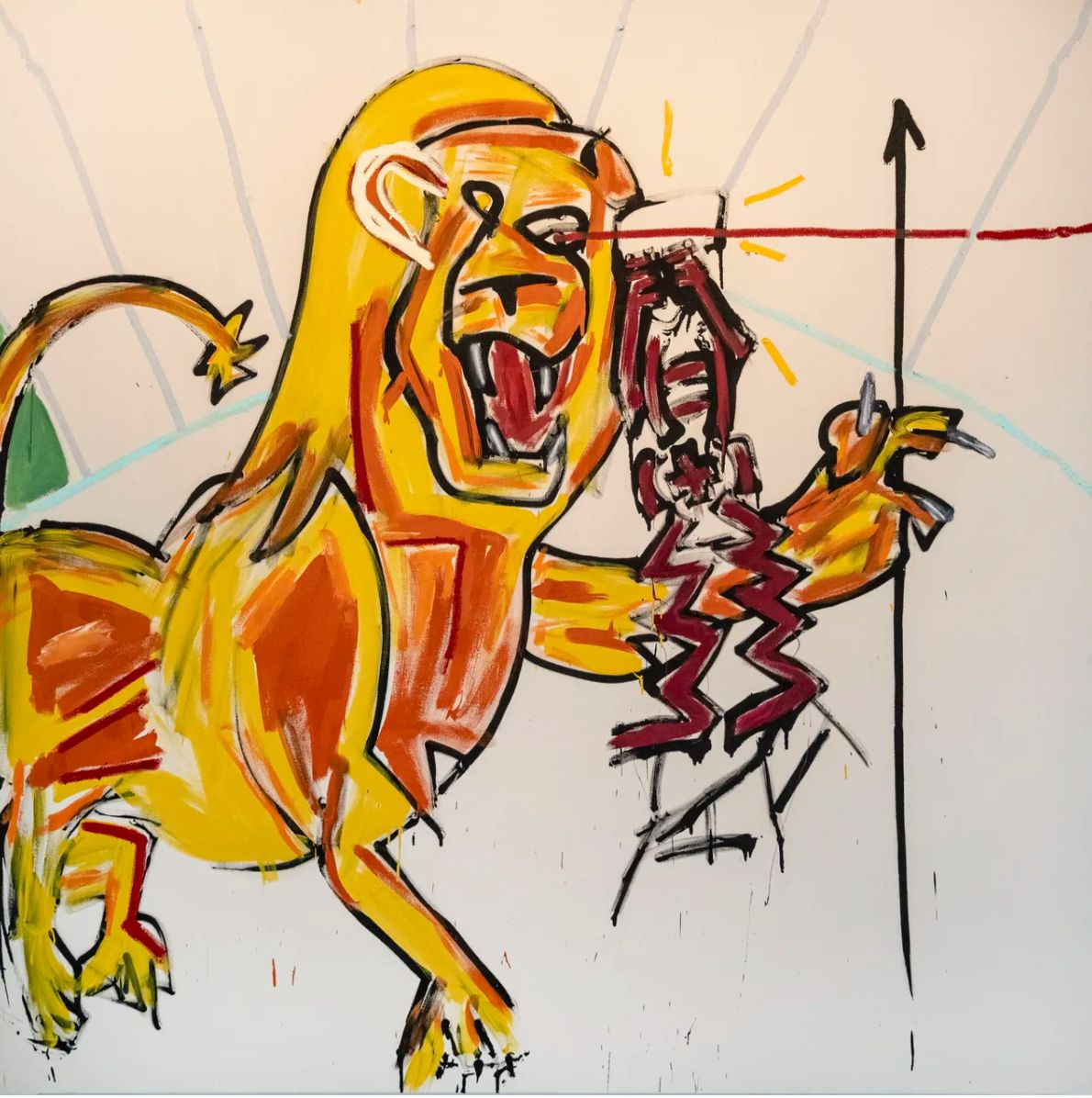
In Santa Monica, Danny Minnick’s “20/26: A Periodic Table of Consequence, Irrelevance, and Midlife Slices” at Gallery 33 reads like a diary written in symbols, personal, but designed to be decoded. The premise is time itself: a response to the years 2020–2026, framed as an era of disruption, self-reconstruction, and the accelerating presence of AI. Minnick’s signature “Character” forms operate like avatars of everyday survival - figures that feel part cartoon, part mask, part psychological shorthand. That hybridity is the show’s power: it mirrors how identity has become modular in the last half-decade, assembled from news cycles, group chats, public crisis, private reinvention. The work doesn’t mourn this condition so much as archive it: a “living time capsule,” as the exhibition text suggests.
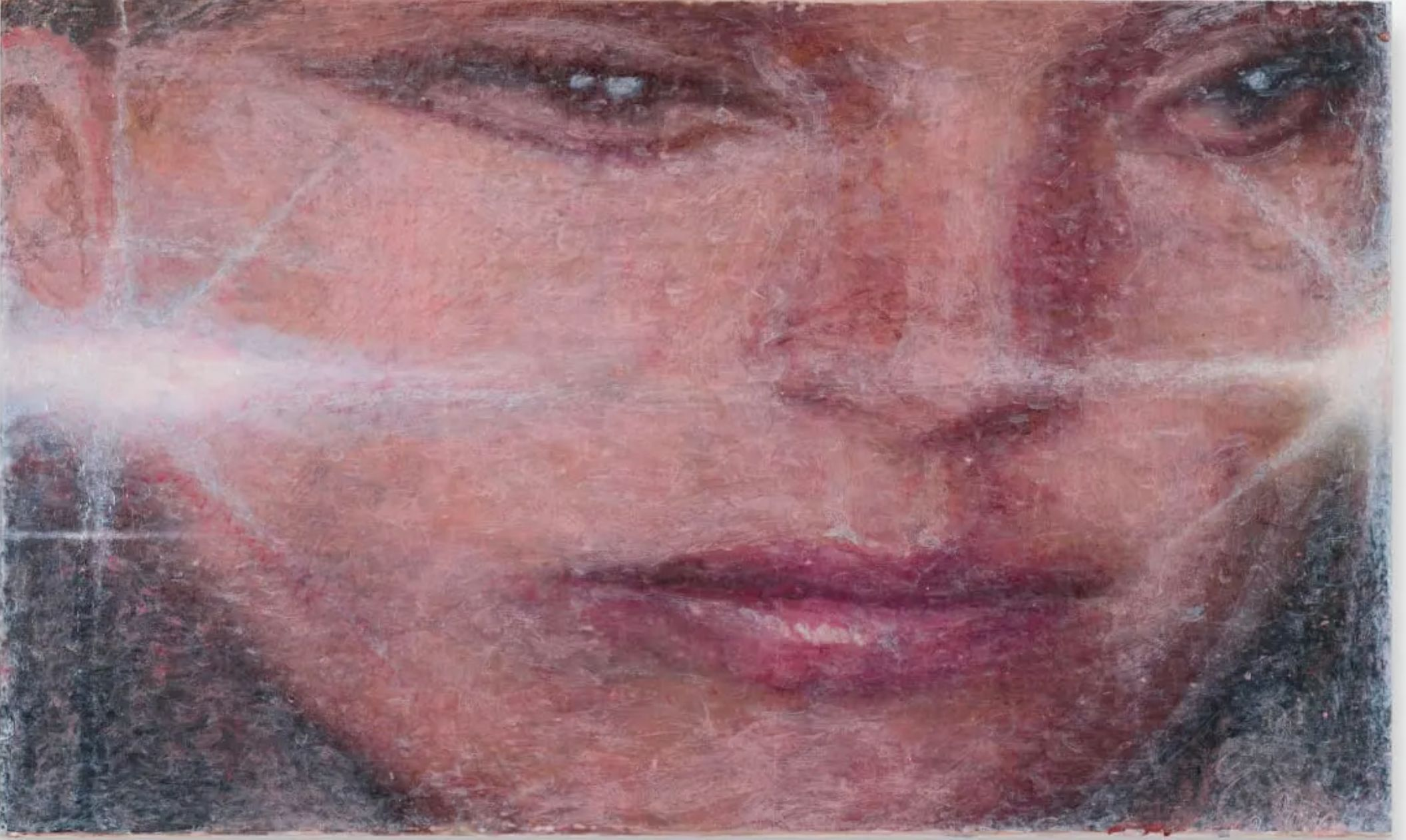
Drive east to Hollywood and Paul Robas’ “Almost There” at Make Room (LA) shifts the conversation from cultural rupture to the quieter suspense of becoming. Robas’ paintings are described as both “distant and familiar,” rendered with a realism that remains visibly painterly - brushwork left present to keep the emotion awake. The title “Almost There” is crucial: it captures that suspended moment when something hasn’t happened yet, but you can feel it approaching. Where Minnick compresses a whole historical period into emblematic figures, Robas lingers on temporality - how life is felt in fragments, in near-arrivals, in images that refuse the clean certainty of a finished narrative. The paintings seem to hold a soft tension: not drama, exactly, but the persistent hum of longing, memory, or expectation.
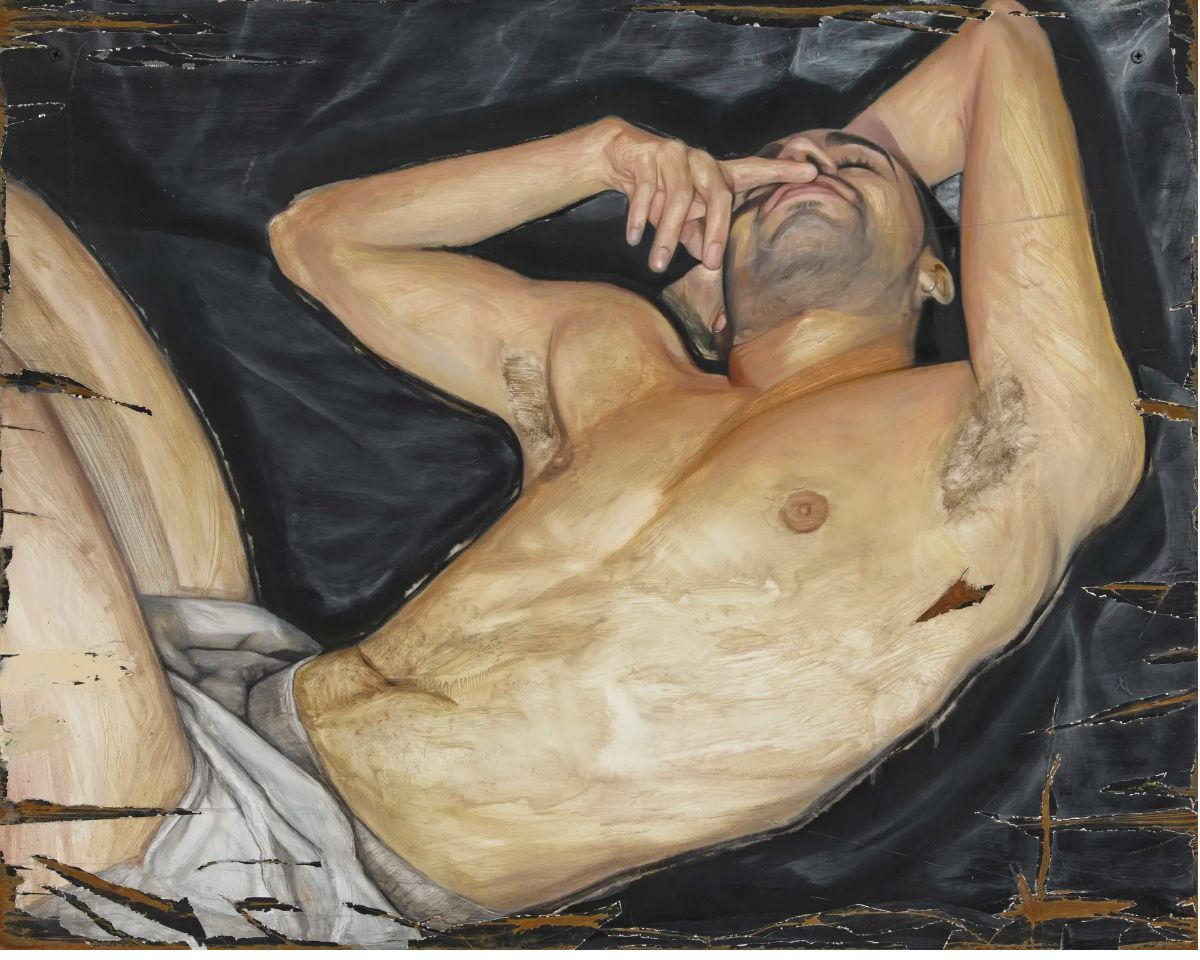
Then London’s Soft Opening offers the most materially confrontational of the three. Sam Lipp’s “Base” (17 January–14 March 2026) is built on an insistence that the support, the literal ground, matters. Lipp works with oil on steel, even including a painting on a steel medical box, and introduces frottage made by rubbing against sidewalk cement - an act that drags the city’s texture into the image. The result is oddly durable and deeply vulnerable at once: steel as armor, frottage as abrasion, flesh as subject and threat. Coverage of the show notes a progression in “three main colourways,” from visceral reds to greys and hyper-exposed whites, playing between old-film grit and digital glare as described in Wallpaper* If Minnick is making a social time capsule and Robas is painting the feeling of “not yet,” Lipp is insisting on the body’s base reality - its fragility, its decay, its survival through contact.
Seen together, the shows triangulate three coordinates of contemporary figurative painting:
Symbolic compression (Minnick): figure as cultural cipher; the “Character” as a way to survive information overload.
Emotional suspension (Robas): figure as atmosphere; realism that keeps the bruise of brushwork vision.
Material abrasion (Lipp): figure as physical fact; surface as evidence, the city literally pressed into the work.
And yet all three share a common refusal: none of them offer a frictionless image. Minnick interrupts legibility with emblem and character-code; Robas interrupts resolution with painterly hesitation; Lipp interrupts comfort with steel, rubbing, and bodily exposure. In different ways, each show argues that the contemporary figure can’t be “pure”. It has to carry the noise of its conditions.
For artists who want to turn this kind of momentum into collector attention you can use LettsArt:
Build a show landing page + collector follow-up in one place. Use LettsArt to publish a clean online gallery for the exhibition (install shots, works, prices on request if you prefer), then post updates directly to followers, studio notes, a walkthrough, a “last week to see it” reminder. LettsArt explicitly supports connecting with collectors through posts and follower communication.
Get discoverable beyond your city with LettsArt Market. If you’re exhibiting in Santa Monica, LA, or London, you don’t want your collector reach to stop at the postcode. LettsArt Market aggregates works for sale across the LettsArt community so collectors can browse and click through to buy directly from your own gallery, effectively widening your audience without handing over your brand. LettsArt - The home for great art
Across these three shows, the lesson is clear: the work is local, but the conversation is global. The artists who win in 2026 will be the ones who can keep their practice rooted - like Lipp’s “Base” - while letting their audience travel farther than their openings ever could.

